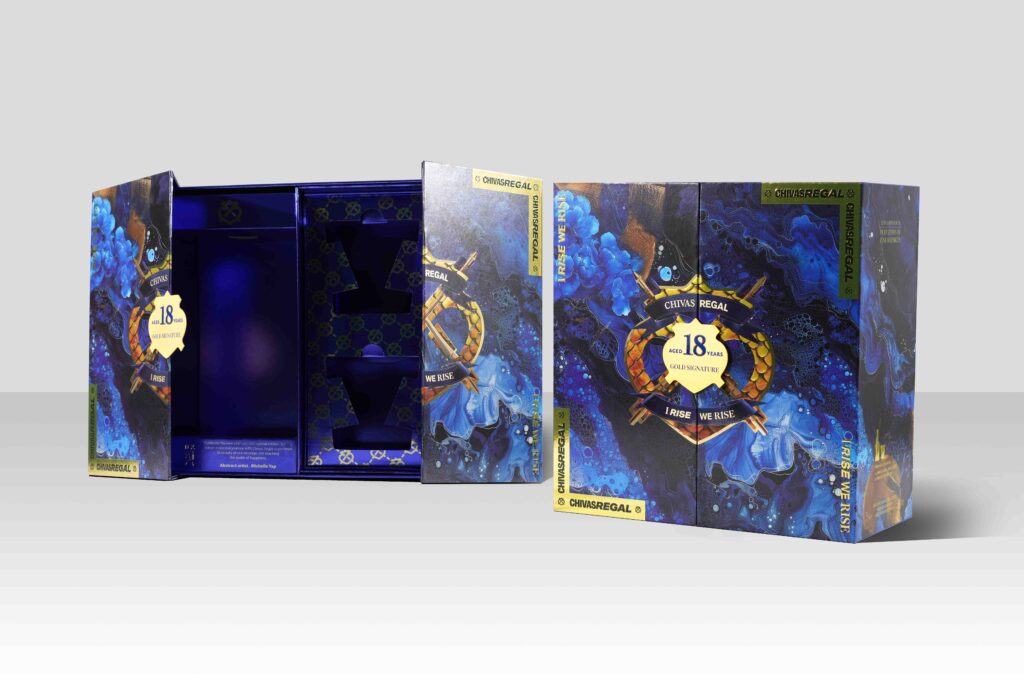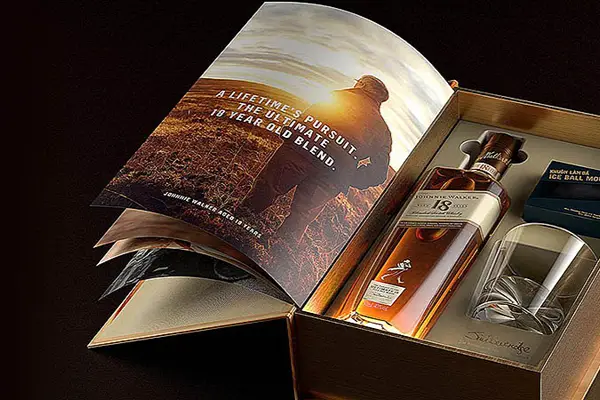
Choosing the right liquor boxes is a high-stakes decision that directly impacts breakage rates, shelf appeal, and profit margins. A miscalculation in material strength or structural design leads to costly damage throughout the supply chain, while a weak visual presentation undermines your spirit’s price point before a customer tastes it. These are not just containers; they are strategic assets that protect revenue and build brand equity from the distillery to the retail floor.
This guide explores the main factors involved in liquor box design, including box structures, material selection, and finishing techniques such as foil stamping and embossing. It provides practical guidance for balancing product protection, production costs, and brand presentation across different packaging requirements.
Why Liquor Boxes Matter for Spirits Brands
A liquor box serves multiple functions beyond protection. It helps safeguard the bottle during transportation, enhances shelf presentation, and supports a consistent brand experience from production to retail.
Protecting Product Quality and Value
A spirit’s journey from distillery to glass is rough. The right box is the first line of defense. It shields the bottle from direct light and temperature swings, which can alter the intended flavor and aroma over time. More directly, a well-engineered box reduces financial losses from breakage during transport and handling. It prevents the scuffs, dust, and humidity damage that can make a premium bottle look cheap. This protection comes from a careful balance of a lightweight structure to manage shipping costs and a strong design that can withstand the pressures of stacking and moving.
- Shields spirits from light and temperature changes that can alter flavor and aroma.
- Reduces the risk of breakage during transport, handling, and storage.
- Preserves bottle and label condition by preventing dust and humidity damage.
- Provides a lightweight yet strong structure that balances protection with shipping costs.
Elevating Brand Perception and Justifying Price
Before anyone tastes the spirit, they interact with the packaging. A flimsy box signals a cheap product, but a rigid box with weight and texture immediately communicates quality and justifies a higher price point. The box is a brand ambassador, telling a story about the spirit’s origin, craftsmanship, and personality through its design, materials, and finishes like foil or embossing. For a consumer scanning a shelf, the box is the first physical signal of the spirit’s price tier, intended occasion, and overall quality, setting expectations long before the bottle is even opened.
- Acts as a brand ambassador, communicating quality before the bottle is opened.
- Uses material weight, texture, and finishes to signal a premium product.
- Tells a brand’s story, conveying origin, craftsmanship, or personality.
- Provides the first physical signal of a spirit’s price tier, category, and target occasion.
Boosting Shelf Impact and Sales Performance
In a crowded retail aisle, a bottle alone can get lost. A liquor box functions as a small billboard, using its shape, color, and graphics to capture attention and differentiate the brand. This increased visibility boosts brand recognition, making it easier for repeat customers to find your product. The box also serves as a direct conversion driver by transforming a standard bottle into a gift-ready item. This simple change encourages impulse buys and increases basket value, particularly during holidays or for special occasions. Brands leverage this by creating seasonal or limited-edition boxes to drive incremental sales and create buzz.
- Functions as a billboard on the shelf, capturing attention in crowded retail settings.
- Increases brand recognition, making it easier for consumers to locate the product.
- Transforms a standard bottle into a gift-ready product, directly increasing basket value.
- Enables seasonal and limited-edition campaigns to drive incremental sales.
Enhancing the Gifting and Unboxing Experience
Packaging is what positions a spirit for specific gifting occasions, from holidays to corporate events. A well-designed box reduces purchase friction for the consumer; it’s already a presentable gift, no wrapping required. But its role goes deeper, creating a memorable unboxing ritual. Elements like magnetic closures, internal printing, and custom inserts that cradle the bottle reinforce feelings of care and exclusivity. This experience elevates the perceived value of the spirit inside, turning a simple purchase into a special event and encouraging collector interest for premium and limited editions.
- Positions the spirit for specific occasions like holidays, celebrations, or corporate gifts.
- Creates a memorable unboxing ritual that reinforces feelings of exclusivity and care.
- Offers gift-readiness that reduces purchase friction for consumers.
- Supports higher perceived value and collector interest, especially for premium editions.
Improving Logistics and Operational Efficiency
Beyond marketing, liquor boxes are a critical component of operational efficiency. Their uniform, stackable shape improves palletization, making warehousing and shipping far more efficient than handling individual, oddly-shaped bottles. This structural integrity directly reduces financial losses from breakage throughout the supply chain. For retailers, boxed products are easier to manage, stock, and track in inventory. When the bottle and box are designed in tandem, it also allows for standardized and automated packaging lines, reducing downtime and labor costs at the distillery.
- Improves palletization and stacking for more efficient shipping and warehousing.
- Reduces financial losses from product breakage throughout the supply chain.
- Facilitates easier inventory management and restocking for retailers.
- Allows for standardized packaging lines when designed in concert with bottle dimensions.
Common Liquor Box Structures
Liquor box structures aren’t one-size-fits-all. They fall into three categories based on the job: lightweight folding cartons for retail, heavy rigid boxes for gifts, and corrugated shippers for transit.
Folding Cartons for Retail Products
Folding cartons are the workhorse for mass-market spirits. These boxes are constructed from lightweight paperboard and serve as the outer packaging for standard bottles on a retail shelf. Common styles include basic tube-type and tuck-end cartons, which are cost-effective and easy to assemble.
For heavier glass bottles, reinforced structures such as auto-lock bottoms or stronger locking mechanisms can provide additional support and improve package stability during handling.
Its interlocking tabs provide the extra structural support needed to prevent the bottle from falling through. The smooth surface of paperboard is also an excellent canvas for high-quality printing, branding, and special finishes that help a product stand out.
Rigid Boxes for Luxury and Gift Sets
When brands need to signal luxury, they turn to rigid boxes. Used for high-end spirits, limited editions, and gift sets, these are made from thick, non-collapsible greyboard wrapped with premium paper or other materials. The solid construction immediately conveys a high perceived value and is durable enough to be kept as a keepsake box.
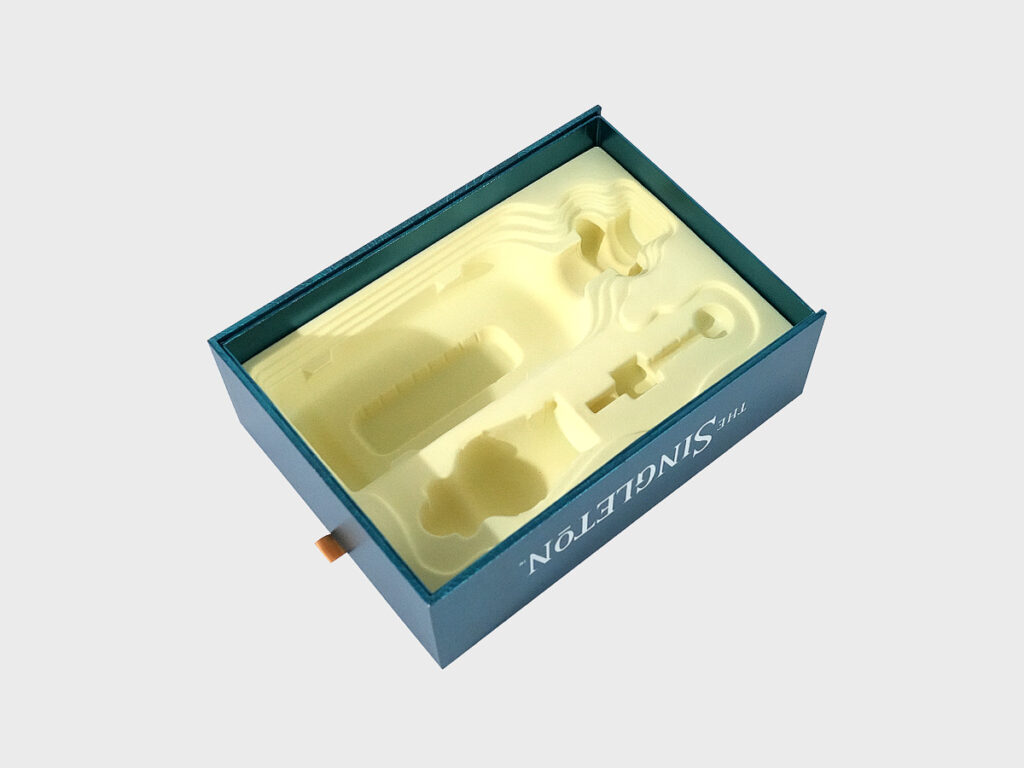
Popular structures focus on the unboxing experience and include book-shaped boxes, drawer-style (or sliding) boxes, and designs with a magnetic closure. These premium formats almost always contain custom inserts—such as high-density EVA foam, molded pulp, or fabric-lined trays—that cradle the bottle and any accessories perfectly.
Corrugated Boxes for Shipping and Transit
Corrugated boxes are designed for one primary purpose: protecting glass bottles during transport and storage. The most common style for shipping cases of 6 or 12 bottles is the Regular Slotted Container (RSC). It’s a standard, efficient design that gets the job done for palletized loads.
For heavy loads or distribution chains with rough handling, a Full Overlap Slotted Container (FOL) provides superior stacking strength and edge protection. In the e-commerce space, single-bottle shipments often use die-cut one-piece folders that wrap snugly around the product, minimizing movement and the need for excessive void fill.
Internal Supports and Inserts
The outer box is just a shell without the right internal supports. These components are integrated inside the box to secure the bottle and protect it from movement, impact, and vibration. In multi-bottle shipping cases, simple cardboard dividers or partitions create individual cells to prevent glass-on-glass contact, which is a major cause of breakage.
- Neck and shoulder supports are crucial for locking a bottle in place. These die-cut pieces prevent the bottle from tipping or sliding vertically during transit.
- Foam (EVA) inserts are standard in luxury gift boxes. They offer high-level shock absorption and can be cut precisely to fit the bottle and any accompanying items, creating a clean presentation.
- Molded pulp inserts serve a similar function to foam but are a more sustainable alternative. These trays are molded to the shape of the bottle, providing excellent cushioning and a premium, eco-conscious feel.
Engineered Packaging for High-End Spirits & Wine
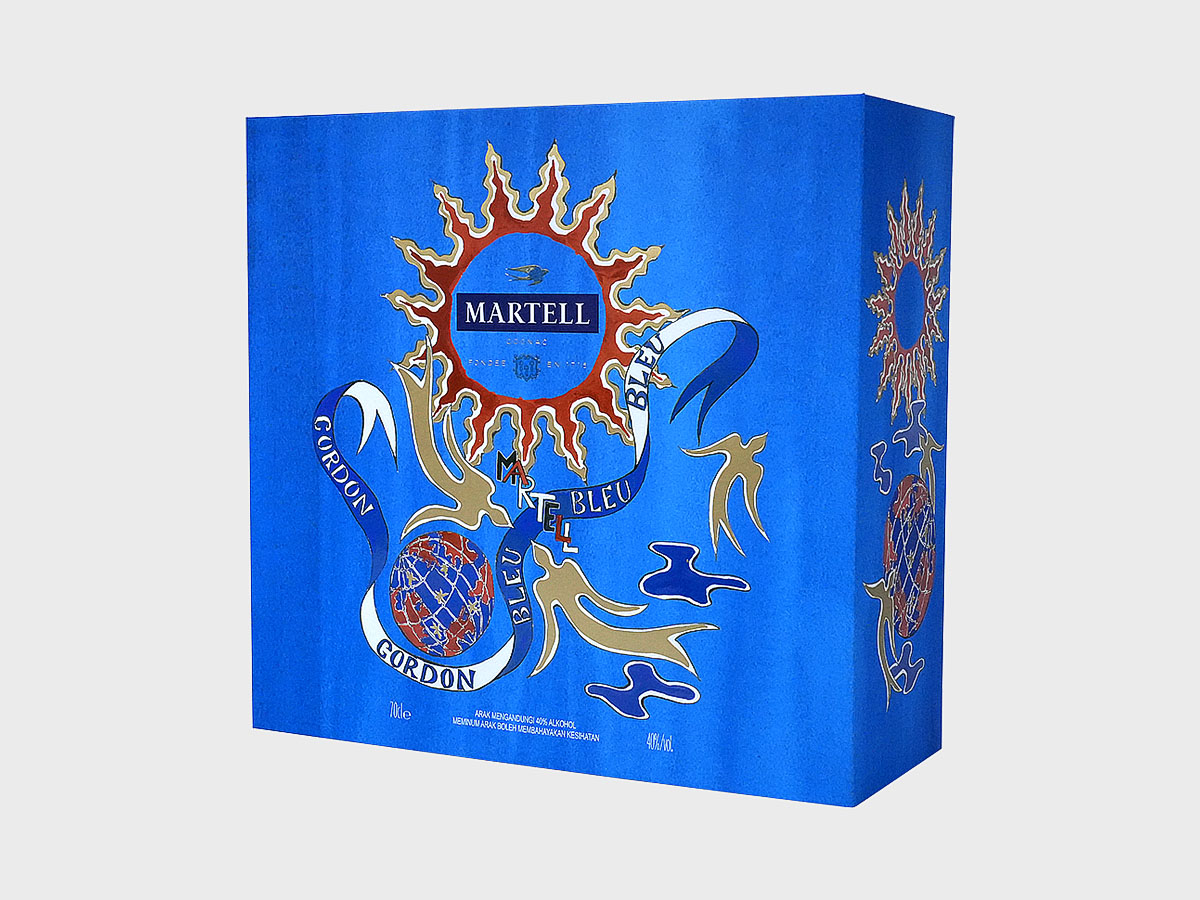
Choosing Materials for Different Spirits Products
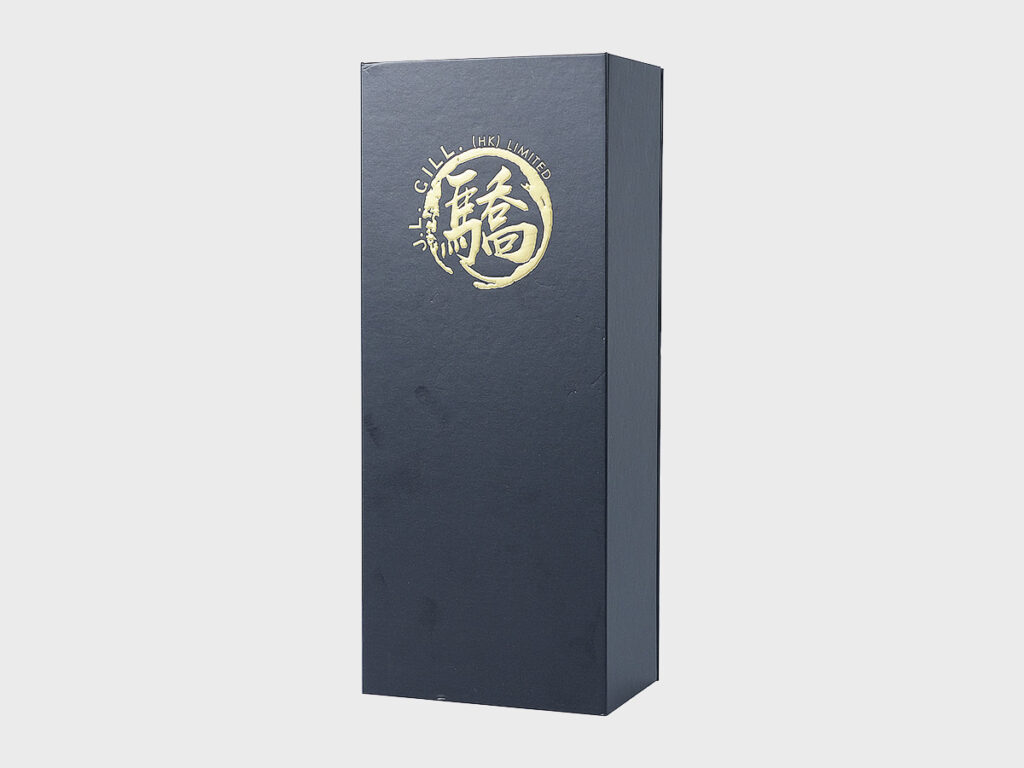
Material selection for a spirit’s packaging hinges on its category, balancing premium retail needs against the practical demands of protection and mass-market transport.
The material selection for a liquor box affects more than appearance. It influences product protection, production costs, and how consumers perceive the brand at the point of sale.
A budget-friendly vodka sold in high volumes has fundamentally different packaging requirements than a 25-year-old single malt intended as a collector’s item. Aligning the material with the product and its journey to the customer is a critical business decision.
Whisky, Rum, and Aged Spirits
Aged spirits rely heavily on packaging to communicate heritage and justify premium prices. The materials must feel substantial and reflect the time invested in the product.
- Retail and Gift Packaging: Rigid board, laminated cartons, and classic cylindrical paper tubes are the standard for premium retail. These materials support high-end finishes and convey quality at the point of sale.
- Ultra-Premium Editions: For limited editions or ultra-premium bottlings, wood boxes are unmatched. They create a strong link to craftsmanship and barrel-aging narratives, functioning as a keepsake long after consumption.
- Luxury Finishes: Foil stamping, embossing, and textured papers can enhance the visual and tactile qualities of packaging while helping brands create a more distinctive product presentation.
- Transport and Logistics: To move these high-value bottles, double-wall corrugated boxes fitted with protective dividers or foam nets are necessary to prevent breakage and scuffing during shipment.
Vodka, Gin, and Clear Spirits
The packaging for clear spirits often reflects modern, clean, or artisanal brand identities. The focus is on sharp graphics and structural designs that complement the bottle.
- Modern Aesthetics: Solid board cartons are a strong choice as they provide an excellent surface for high-quality printing, vibrant colors, and metallic inks that align with a contemporary look.
- Artisanal Positioning: For craft gins or tequilas, uncoated paperboard or natural kraft materials help communicate an authentic, small-batch feel. This rustic texture stands out against the high-gloss of mass-market brands.
- Structural Design: Clear spirits often come in tall, slender bottles. The packaging structure must be engineered to complement these unique geometries, providing stability and a snug fit.
- Mass-Market Distribution: For high-volume distribution, standard corrugated cases with simple dividers offer a cost-effective and efficient solution for getting products to retailers safely.
Wine and Sparkling Beverages
Wine packaging serves two main functions: efficient case transport and attractive gift presentation. The material choices directly reflect these separate needs.
- Case Transport: The industry standard for case sales and distribution is the corrugated box, typically designed to hold 6 or 12 bottles securely with internal dividers.
- Gift Boxes: For gifts, solid board or laminated boxes are used. These often feature die-cut windows to showcase the bottle’s label, which is a key purchasing factor for many consumers.
- Internal Protection: To prevent bottle rattle and impact, paper-based inserts are critical. This includes die-cut “cunas” that cradle the bottle or shredded kraft paper fillers for cushioning.
- E-commerce Shipping: Shipping fragile or high-end sparkling wines requires extra protection. Protective sleeves, nets, or inflatable air-cushion packs are essential for surviving the parcel delivery network.
Beer and Ready-to-Drink (RTD) Products
In the high-volume beer and RTD segment, packaging materials must be cost-effective, functional, and easy for consumers to handle.
- Multipacks: Printed corrugated or high-strength folding cartons are the workhorses for 4, 6, and 12-packs. The material must be strong enough to hold the weight while supporting branding.
- Retail Functionality: Material and design choices prioritize cost-efficiency and performance on the retail floor. The packaging must stack well on pallets and shelves and be easy for consumers to grab.
- Consumer Convenience: Functional features like integrated carry handles are a key part of the design, making it easier for customers to purchase and transport multipacks.
- PET vs. Glass: When PET bottles are used instead of glass, the secondary packaging can often be made from lighter-duty, more cost-effective materials since the risk of breakage is lower.
Decorative Finishes for Premium Liquor Packaging
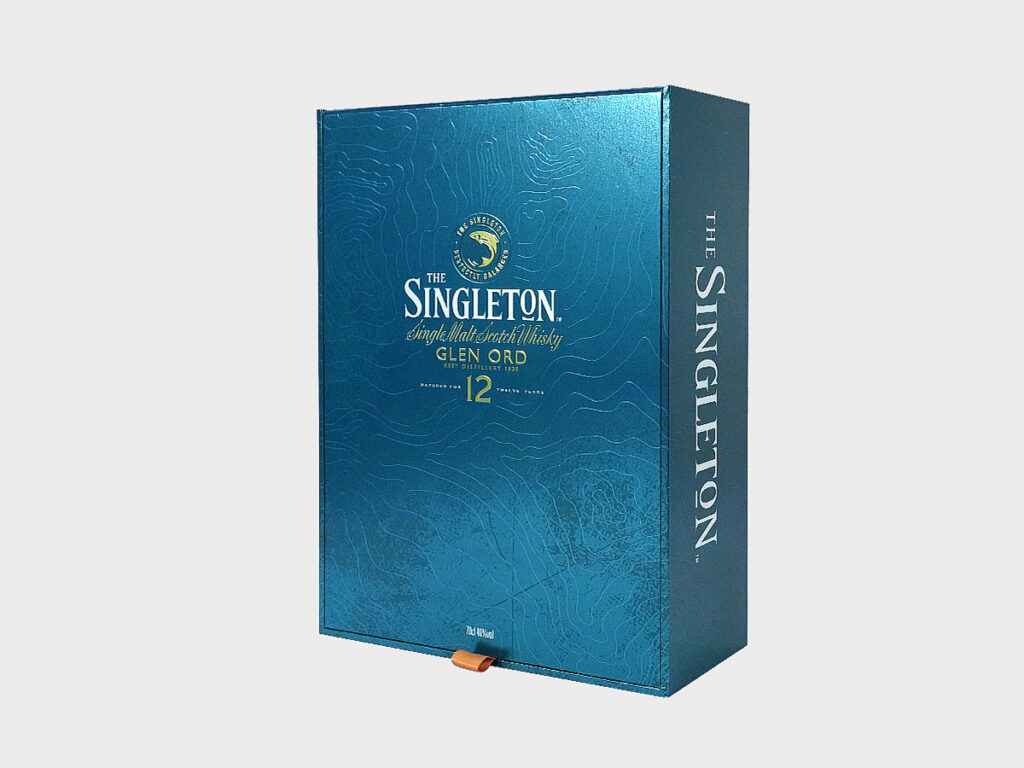
Decorative finishes on premium liquor boxes are essential for communicating luxury. They combine visual and tactile effects to justify higher prices and make a brand stand out on the shelf.
When a customer picks up a bottle of premium liquor, the box is the first physical interaction they have with the brand. The right finish does more than protect the product; it signals quality, craftsmanship, and value before the bottle is even opened. These techniques are strategic tools to differentiate a spirit in a crowded market.
Surface Coatings and Laminations
Coatings and laminations are applied to the entire surface of the box to alter its feel and appearance while adding a layer of protection.
- A matte lamination or varnish gives the box a subtle, sophisticated look that cuts down on glare, making it a popular choice for premium whiskies and minimalist designs.
- High-gloss finishes make colors pop and help a product grab attention under bright retail lighting, working well for vibrant spirits like flavored vodkas or tequila.
- Soft-touch coatings create a velvety, almost rubber-like texture. This signals a premium product the moment a customer handles the box.
- Pearlescent and glitter coatings add shimmer or sparkle, a finish often used for festive or celebratory spirits to create a sense of occasion.
Foil Stamping and Metallized Effects
Metallic effects are a classic indicator of luxury and are used to draw the eye to key brand elements.
Hot foil stamping is a widely used finishing technique for premium packaging. The process uses a die to press metallic foils—like gold, silver, or copper—directly onto the box for a crisp, reflective finish.The reflective qualities of foil catch light, effectively communicating value on a crowded retail shelf or a dimly lit back bar.
- Cold foil printing is an inline process that works well for intricate metallic patterns or gradients that cover large surface areas.
Holographic foils can create eye-catching visual effects and may be combined with specialized security features when brands require additional anti-counterfeiting solutions.
Embossing and Debossing
This process uses a custom die to create a three-dimensional effect, adding a physical texture that enhances the tactile experience.
- The technique creates either a raised (embossed) or recessed (debossed) relief, adding a physical depth you can feel.
- It is commonly used to make brand logos, signatures, or intricate all-over patterns stand out from the surface.
- By engaging the sense of touch, it immediately enhances the perception of craftsmanship and quality.
- Embossing is frequently combined with foil stamping to produce a premium effect that resembles a metallic coin or an official seal.
Spot UV and Textured Varnishes
Unlike an all-over coating, these varnishes are applied to specific areas to create contrast and guide the consumer’s attention.
- Spot UV applies a targeted high-gloss layer over a matte surface, a great way to highlight specific elements like a logo or key graphic.
- Textured varnishes can mimic the feel of materials such as linen, leather, or wood grain, connecting the packaging directly to a brand’s story.
- Gloss contrast patterns create subtle “discoverable details” that only appear when the box is tilted at certain angles in the light.
- Both techniques are used to create a multi-sensory experience and are effective at directing how a consumer visually interacts with the package.
Balancing Protection, Cost, and Appearance
Choosing the right liquor box means balancing bottle protection against total landed cost. The optimal choice depends on your product tier, shipping risks, and brand appearance goals.
Every spirit brand faces the same challenge: how to get a fragile glass bottle to its destination safely without breaking the bank or compromising the brand’s image. There’s no single “best” box. The right solution is a calculated trade-off between protecting the product, managing costs, and delivering the desired customer experience. This requires a clear strategy for each product tier and a solid decision-making framework.
Strategies by Product Tier
Your packaging strategy must align with your product’s market position. Spending on luxury packaging for a value spirit erodes margins, while under-protecting a premium bottle is just as damaging to your bottom line and brand reputation.
| Product Tier | Protection & Material Strategy | Cost & Appearance Focus |
|---|---|---|
| Value Spirits | Prioritize low per-unit cost using single-wall corrugated shippers (32–44 ECT) with basic corrugated dividers. | Accept minimal branding on the shipper and focus entirely on the lowest possible packaging cost. |
| Mid-Range Wine & Spirits | Balance protection and cost with double-wall shippers or robust single-wall boxes combined with targeted inserts to prevent movement. | Invest in branded retail cartons for shelf appeal, which are then packed in functional, protective master shippers. |
| Premium & Gift Sets | Invest in high-protection solutions like rigid boxes and custom molded pulp inserts that cradle the bottle and any accessories. | Accept higher packaging and freight costs to achieve a luxury appearance and a premium unboxing experience. |
Decision Framework for Liquor Box Selection
A structured approach removes guesswork from your packaging decisions. Follow these steps to systematically arrive at the right box specifications for your product and supply chain.
- Assess Product & Shipping Realities: Start by defining your product’s fragility (bottle weight, glass thickness) and the shipping conditions it will face (e.g., local delivery vs. export, expected stacking height).
- Set Protection Thresholds: Based on the assessment, establish minimum protection requirements. This includes the Edge Crush Test (ECT) grade, board type (single vs. double-wall), and the type of internal support needed (dividers, molded pulp).
- Model the Total Landed Cost: Look beyond the price per box. Calculate the total landed cost, which includes the box itself, freight, storage, and the anticipated cost of damage and returns for different packaging options.
- Define Appearance Goals: Determine the role of the packaging in your branding. Decide if you need a basic functional shipper, a branded retail carton, or a luxury gift box with premium finishes.
- Verify Regulatory Compliance: Ensure your final design complies with all relevant regulations, including mandatory health warnings, transport codes for flammable goods, and packaging waste rules in your target markets.
- Prototype and Test: Before committing to a large production run, get physical prototypes. Validate the design with drop, vibration, and stacking tests to confirm it meets your protection thresholds in a real-world setting.
Practical Optimization Examples
Theory is one thing, but here’s how these balanced decisions are applied in common industry scenarios.
- For E-commerce Shipments: The priority is surviving the parcel delivery network. Brands use double-wall corrugated boxes (44–60 ECT) with full-cell dividers to isolate each bottle and minimize breakage risk for direct-to-consumer orders. Appearance is secondary to protection.
- For Retail Shelf Packaging: Here, appearance is paramount. Brands often use visually appealing paperboard cartons for strong branding on the shelf. These cartons are then shipped in bulk inside simpler, but protective, corrugated master shippers.
- For Premium Gift Packs: This requires the best of both worlds. A luxury rigid box provides the necessary shelf appeal and premium feel, while custom molded pulp inserts securely hold the bottle and any accessories, offering superior protection.
Working with Liquor Packaging Manufacturers

Collaborating with liquor packaging manufacturers requires a structured process, from vetting their specific spirits experience to defining clear technical briefs and robust quality control protocols.
Bringing a new spirit to market or refreshing an existing one involves a critical partnership with your packaging manufacturer. The process isn’t just about placing an order; it’s a technical collaboration that ensures your final product is protected, compliant, and brand-appropriate. Here’s how to manage the key stages of that relationship.
Finding and Vetting Potential Manufacturers
The first step is identifying partners with the right capabilities. When selecting a packaging partner, brands should evaluate whether the manufacturer has relevant experience with liquor and spirits packaging projects.
The vetting process should be thorough, focusing on their direct experience in your sector.
- Assess their operational history, physical location and logistics network, and their approach to inventory management. Do they hold stock or produce entirely on demand?
- Verify they have specific experience in the liquor sector. Ask to see examples of projects for wine, whiskey, gin, or other spirits, not just general consumer goods.
Review the manufacturer’s certifications and quality processes. ISO 9001 indicates a structured management system, while effective production controls help maintain consistent packaging quality.
- Request physical product samples and a list of references from existing wine or spirits brands. A reputable manufacturer will have no problem providing these.
Providing a Clear Technical and Creative Brief
Your manufacturer can’t read minds. A detailed brief is essential to avoid costly errors and multiple revision cycles. This document should leave no room for interpretation on technical, creative, or logistical requirements.
- Supply precise bottle specifications, including technical drawings with dimensions, material (e.g., glass, PET), weight, and critical neck finish details.
- Specify the legal fill volumes required for each target market. A box designed for a 750 mL bottle for the US market will not fit a 700 mL bottle intended for Europe.
- Communicate your branding goals, target consumer profile, and desired aesthetic (e.g., premium and minimalist, rustic and craft).
- Define your distribution needs clearly. This includes case counts, pallet configurations, and the maximum expected stacking height in your warehouses, as this dictates the required compression strength of the boxes.
Managing the Prototyping and Validation Phase
Before committing to a full production run, you must validate the packaging design with physical prototypes. This is where potential issues with fit, function, and durability are caught and corrected.
- Review both digital mockups for art placement and physical “white samples” for structure. Always conduct fit testing using the actual glass bottle, not a 3D-printed replica.
- Conduct or commission transit simulations. These tests, which include drop, vibration, and compression tests (like ISTA standards), validate that the packaging will protect the product throughout the supply chain.
- Verify that all required barcodes (like GTINs) are correctly placed, sized, and easily scannable on both the retail box and the outer shipper carton.
- Approve final artwork proofs and color drawdowns under controlled lighting to ensure color consistency and print quality meet brand standards.
Establishing Quality Control and Compliance Protocols
Once production begins, a clear quality control framework ensures that the final output matches the approved “golden sample.” This is not something to leave to chance; it must be a documented agreement.
- Agree on documented QC checkpoints for incoming materials (board, inks), in-process printing and die-cutting, and final assembly.
- Define defect classifications (critical, major, minor) and the acceptable tolerance levels for each. A critical defect might be a structural failure, while a minor one could be a small scuff on a non-visible panel.
- Ensure all artwork complies with alcohol marketing codes in your target regions, specifically avoiding imagery that could be construed as appealing to minors.
- Confirm the manufacturer’s systems for hygiene and preventing contamination. Even though the box is secondary packaging, materials must be free from odors or residues that could migrate to the product.
Final Thoughts
Choosing packaging based only on initial cost may create challenges in product protection, appearance, and supply chain performance. A suitable liquor box design should balance structural reliability, production efficiency, and brand presentation.
The structural, material, and finishing standards detailed in this guide are your commercial defense. They ensure your spirit’s value is protected from the distillery to the customer’s hands.
You now have the framework for making a strategic packaging decision. The next step is to verify that quality firsthand with a physical prototype that matches your exact bottle specifications. Contact our team to move from design to production.
Frequently Asked Questions About Liquor Boxes and Packaging
What type of box is used for liquor bottles?
Liquor bottles are commonly packaged in folding cartons, rigid boxes, and corrugated boxes. The right choice depends on the bottle size, product positioning, transportation requirements, and whether the packaging is designed for retail, gifting, or shipping.
How do you make liquor packaging look premium?
Premium liquor packaging is created through a combination of structural design, quality materials, and decorative finishes. Techniques such as foil stamping, embossing, matte lamination, and custom inserts can enhance the visual appeal and tactile experience.
What material is best for liquor boxes?
The best material depends on the product requirements. Paperboard is widely used for retail packaging, rigid board is suitable for premium gift sets, and corrugated board provides stronger protection during transportation.
Can liquor boxes include bottle inserts?
Yes. Custom inserts such as EVA foam, molded pulp, paper dividers, and fabric-lined trays can be added to secure bottles, reduce movement, and improve the overall presentation.
How are liquor boxes printed?
Liquor boxes are typically printed using offset printing, UV printing, or other customized printing methods. Additional processes such as coating, foil stamping, and embossing can be applied to enhance the packaging appearance.
What finishes are used on alcohol packaging?
Common finishes for alcohol packaging include matte or gloss lamination, UV coating, foil stamping, embossing, debossing, and textured varnishes. These finishes help create distinctive packaging designs and improve shelf appeal.
Are paper liquor boxes durable?
Yes. Properly designed paper liquor boxes can provide reliable protection for bottles. Material thickness, structural design, and internal supports all affect the durability and performance of the packaging.
How much do custom liquor boxes cost?
The cost of custom liquor boxes depends on factors such as box structure, material, size, printing method, finishing options, order quantity, and customization requirements.
What is the best packaging for whiskey bottles?
Whiskey packaging often uses rigid boxes, premium folding cartons, or customized gift boxes with inserts. The ideal solution depends on the bottle style, brand positioning, and required level of protection.
How to choose liquor packaging suppliers?
Choose a supplier with experience in liquor packaging, reliable production capabilities, quality certifications, and the ability to provide structural design, printing, and finishing solutions.