
Fornecimento caixas de embalagem de eletrônicos sem uma lista de verificação de qualidade estruturada pode aumentar o risco de danos ao produto, problemas de envio, e apresentação inconsistente da marca. De teste de esmagamento de borda insuficiente (ECT) classificações para baixa qualidade de acabamento, pequenos defeitos na embalagem podem afetar a proteção do produto e a experiência do cliente.
Esta lista de verificação cobre os principais fatores de qualidade que os compradores devem analisar antes de encomendar caixas de embalagens de eletrônicos, incluindo conformidade material, desempenho estrutural, qualidade de impressão, e capacidade de produção do fornecedor.
Verifique a qualidade do material
Verificar a qualidade do material para embalagens eletrônicas significa verificar se todos os substratos atendem às especificações mecânicas definidas, ambiental, regulatório, e limites de desempenho estético antes de serem usados na produção.
Quando um novo lote de material de embalagem chega, não basta apenas olhar para isso. Para eletrônicos, cada componente – desde o remetente externo até a espuma interna – deve atender a especificações precisas.
Deixar de verificar essas especificações antecipadamente leva a produtos danificados, falhas de conformidade, e uma imagem de marca manchada. Este processo não envolve suposições; é uma série estruturada de verificações que combinam testes de laboratório, documentos do fornecedor, e inspeção prática.
Verifique as propriedades mecânicas e estruturais
A resistência física da sua embalagem é a sua primeira linha de defesa. As matérias-primas devem ser testadas para confirmar que podem suportar as tensões físicas do transporte e manuseio. Isso envolve medir as propriedades principais em relação aos padrões estabelecidos.
- Meça o calibre e a densidade do papelão. Use métodos como ISO 534 para verificar a espessura e consistência da placa. Para caixas rígidas, a espessura do quadro cinza geralmente é selecionada com base no tamanho da caixa, peso do produto, e exigia rigidez em vez de uma única faixa fixa.
- Verifique as classificações do papelão ondulado. Verifique o teste de esmagamento de borda (ECT) e classificações de resistência à ruptura de relatórios de fornecedores. Uma ECT de 32 é um mínimo comum, mas produtos mais pesados exigem classificações mais altas para garantir que correspondam ao peso do produto e às demandas de envio.
- Avalie as propriedades da inserção de espuma. Inspecione fisicamente as inserções de espuma para verificar sua densidade, conjunto de compressão, e desempenho de amortecimento. A espuma deve ser resistente o suficiente para absorver impactos sem deformar permanentemente.
- Confirme a resistência à compressão das caixas montadas. A caixa final deve suportar cargas empilhadas durante o transporte e armazenamento. Teste amostras montadas para garantir que atendam às metas especificadas de resistência à compressão.
Avalie o desempenho protetor e ambiental
Os eletrônicos são sensíveis a fatores ambientais como umidade e eletricidade estática. Seus materiais de embalagem devem fornecer uma estabilidade, barreira protetora contra esses perigos sem introdução de contaminantes.
- Teste o papelão quanto ao teor de umidade apropriado (MC). O papelão recebido deve ter um teor de umidade entre 6–8%. Qualquer coisa fora desta faixa pode causar empenamento e fraqueza estrutural.
- Verifique materiais para componentes sensíveis a ESD. Verifique se a espuma e os sacos para dispositivos sensíveis à eletrostática estão em conformidade com padrões como ANSI/ESD S20.20 ou IEC 61340-5-1 através de relatórios de testes certificados.
- Garanta protocolos de embalagem seca para dispositivos sensíveis à umidade (LME). Para dispositivos como semicondutores, confirme se a embalagem segue JEDEC J-STD-033, que inclui sacos de barreira específicos e dessecantes.
- Inspecione todos os materiais quanto à limpeza. Todos os componentes devem estar livres de poeira, íons, ou outras partículas que possam contaminar os componentes eletrônicos durante a montagem ou desembalagem.
Confirme a conformidade regulatória e de sustentabilidade
Sua embalagem deve estar em conformidade com uma rede de regulamentações internacionais e padrões de sustentabilidade. A verificação desta documentação protege o seu acesso ao mercado e apoia os objetivos de responsabilidade corporativa da sua marca.
- Solicite relatórios para regulamentações químicas como REACH e RoHS. Os fornecedores devem fornecer relatórios de teste confirmando que as tintas, revestimentos, e os plásticos estão livres de substâncias restritas.
- Validar cadeia de custódia para papelão. Se você reivindicar fornecimento sustentável, verifique a documentação válida de programas como o FSC, SFI, ou PEFC para provar que o papel provém de florestas geridas de forma responsável.
- Verifique se há certificações de fornecedores relevantes. Confirme se seus fornecedores possuem certificações importantes, como ISO 9001 para gestão de qualidade, o que indica um compromisso com processos consistentes.
- Verifique a conformidade com os padrões específicos da aplicação. Para determinados produtos, pode ser necessário verificar a conformidade com os padrões de nicho, como UM 71-3 para segurança de tinta ou UL 94 para inflamabilidade de plástico.
Avalie o acabamento visual e a consistência da impressão
Para eletrônicos de consumo, a embalagem faz parte do produto. Sua qualidade visual e tátil influencia diretamente na percepção do cliente. As verificações estéticas são tão críticas quanto as mecânicas.
- Inspecione as superfícies do substrato em busca de defeitos. Verifique se há suavidade e brilho consistentes, e rejeite quaisquer materiais com manchas visíveis, arranhões, ou outras manchas.
Use um espectrofotômetro para medir a precisão das cores e manter a consistência entre os lotes de produção. Muitas marcas estabelecem requisitos específicos de tolerância ΔE dependendo de seus padrões visuais, processo de impressão, e posicionamento do produto.
- Realize testes padronizados de fricção e desgaste. Confirme a durabilidade das superfícies impressas, revestimentos, e laminados. O acabamento deve suportar o atrito do transporte e manuseio sem degradar.
- Verifique a aderência de acabamentos especiais. Use testes de fita ou descolamento para confirmar se acabamentos como estampagem ou revestimentos de toque suave estão devidamente aderidos ao substrato.
Conduza testes de desempenho de pacotes montados
Testes individuais de materiais são importantes, mas a validação final vem do teste do pacote totalmente montado. Esses testes de desempenho simulam condições do mundo real para confirmar que o projeto funciona como um sistema completo.
- Exigir relatórios de laboratório certificados para simulação de trânsito. Valide o desempenho da remessa com testes de laboratório certificados como ISTA 2A, 3UM, ou 6A. Esses relatórios provam que o pacote pode sobreviver ao ambiente de distribuição.
- Realize testes de queda internos. Realize testes de queda de alturas especificadas em várias faces, bordas, e cantos para confirmar as capacidades de proteção do design da embalagem e suas inserções.
- Teste a caixa final montada quanto à resistência à compressão. Garanta que o pacote completo possa suportar forças de empilhamento reais sem esmagar ou comprometer o produto interno.
- Execute um lote piloto em seu fluxo de trabalho de atendimento real. Antes de se comprometer com a produção em massa, envie um pequeno número de unidades através de todo o seu processo para detectar quaisquer problemas imprevistos com o manuseio, rotulagem, ou envio.
Avalie a resistência estrutural
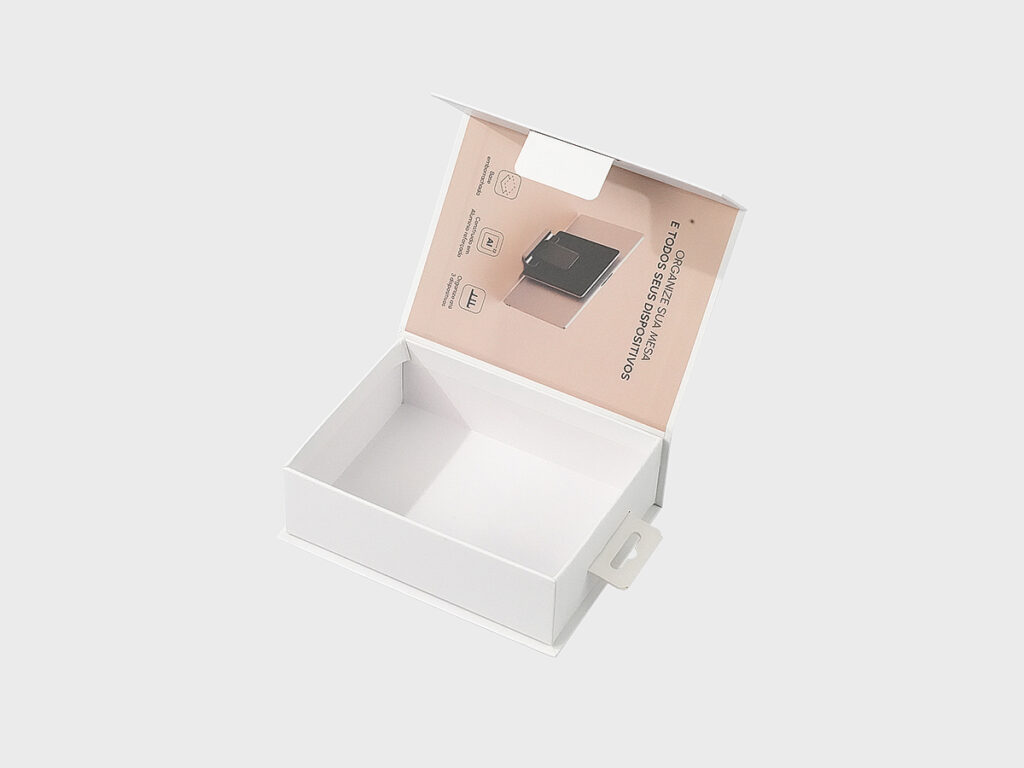
Avaliar a resistência estrutural de uma caixa significa quantificar sua capacidade de proteger a eletrônica usando testes padronizados, não é adivinhação. É a única forma de evitar caixas esmagadas e produtos danificados.
Métricas de resistência central para caixas de papelão ondulado
A conversa sobre a força da caixa começa com algumas métricas importantes. O Teste de esmagamento de borda (ECT) é o mais importante para a logística. Mede a resistência à compressão vertical do papelão ondulado, que informa quanto peso uma caixa pode suportar quando empilhada em um palete. Um valor ECT mais alto significa uma pilha mais forte.
O Força Explosiva (Teste Mullen) mede a resistência de uma caixa a ser perfurada. Isso é crítico para a eletrônica, onde cantos afiados do produto, dissipadores de calor internos, ou impactos de sistemas transportadores podem facilmente romper uma parede de caixa fraca. É uma medida de contenção sob pressão.
Enquanto ECT e Mullen testam a placa, o Teste de compressão de caixa (TBC) mede a carga total que uma caixa montada pode suportar antes de desabar. Isso lhe dá uma imagem muito mais realista do desempenho do empilhamento porque leva em conta o design e a construção da caixa, não apenas a matéria-prima.
Finalmente, paquímetro, ou a espessura da placa, afeta diretamente a rigidez da caixa. A placa mais espessa resiste à flexão e à flambagem. Isto é especialmente importante para caixas eletrônicas com grandes, superfícies planas, como aqueles usados para monitores ou TVs, que pode facilmente desviar ou curvar se a pinça estiver muito baixa.
Protocolos e requisitos de teste padrão
Você não apenas pede “forte” caixas; você cita os padrões. Testes em nível de placa, como o Edge Crush Test (regido pela ISO 3037) e o teste de resistência à explosão (ISO 2759) são usados para certificar que o material corrugado bruto do seu fornecedor atende a um grau específico antes mesmo de ser transformado em uma caixa.
Depois que a caixa for projetada e montada, o teste de compressão de caixa (TBC), seguindo o protocolo ASTM D642, valida a força real do produto final. Este teste confirma se o seu projeto pode realmente lidar com as cargas empilhadas que você espera em seu armazém.
Para uma imagem completa, protocolos de testes de desempenho como ASTM D4169 simulam toda a jornada de distribuição. Esses protocolos combinam uma sequência de quedas, vibrações, e forças de compressão para validar todo o sistema de embalagem - caixa, inserções, e produto - contra os perigos que enfrentará no trânsito.
Os principais varejistas e programas de atendimento de comércio eletrônico podem ter seus próprios requisitos de embalagem relacionados à resistência, dimensões, e desempenho de envio. Antes da produção, os compradores devem confirmar os requisitos de seus canais de distribuição alvo e garantir que o design da embalagem atenda às necessidades logísticas e de proteção do produto. Explore nosso guia em Caixas de embalagens eletrônicas: Como equilibrar proteção e experiência de marca para obter mais informações sobre embalagens proteção e funcionalidade.
Fatores de design e materiais que influenciam a resistência
A resistência do material é apenas parte da equação; o design da caixa é igualmente crítico. A geometria da caixa desempenha um papel importante. Alto, caixas finas têm maior probabilidade de ceder sob pressão, enquanto caixas com grandes, painéis sem suporte precisam de um valor ECT mais alto para evitar que desviem e desmoronem.
O perfil da flauta do papelão ondulado (por exemplo, Flauta B, Flauta C) determina suas características de amortecimento e compressão. Para máxima resistência de empilhamento, as flautas devem ser orientadas verticalmente, paralelo à direção da força compressiva. Alinhá-los horizontalmente é um erro comum e caro.
Não negligencie a junta do fabricante – a costura onde a caixa é colada, gravado, ou grampeados juntos. Uma junta fraca ou inconsistente é um ponto de falha. Reduz drasticamente a resistência da caixa às forças de trasfega e compressão, comprometendo toda a estrutura.
As condições ambientais também têm um grande impacto. A alta umidade é inimiga das embalagens de papelão ondulado. Como a placa absorve a umidade do ar, suas fibras amolecem, o que pode reduzir significativamente sua resistência à compressão e diminuir sua carga de empilhamento segura. Uma caixa perfeitamente resistente num armazém seco pode falhar num armazém húmido..
Como especificar requisitos de resistência
Para obter a caixa certa, você deve fornecer as especificações corretas. Comece definindo o peso do seu produto, sua fragilidade, e o cenário exato de empilhamento que enfrentará. Isso inclui a altura do palete, duração do armazenamento, e condições ambientais como umidade.
Com base na carga, você pode selecionar uma nota apropriada do conselho. Para eletrônicos mais leves, um 32 A caixa de parede única ECT geralmente é suficiente. Para itens mais pesados ou mais frágeis, ou para caixas que serão empilhadas alto, um 44-48 A construção de parede dupla ECT proporciona a margem de segurança necessária.
Suas especificações precisam ser explícitas e contratuais. Não basta dizer “32 ECT”; em vez de, especifique “Flauta C de parede única, ≥32 ECT de acordo com ISO 3037.” A citação do método de teste não deixa espaço para ambigüidades e garante que seu fornecedor tenha uma visão clara, padrão mensurável.
Para caixas rígidas premium, como aqueles usados para smartphones e acessórios de última geração, as métricas são diferentes. Em vez de ECT, você deve especificar o calibrador do quadro cinza (grossura) para ISO 534 e sua resistência à explosão por ISO 2758. Isto garante a integridade estrutural e a sensação premium esperada da embalagem.
Proteja seus eletrônicos com embalagens personalizadas premium

Inspecione a qualidade do acabamento

A inspeção de acabamento verifica se o impresso, revestido, e superfícies decoradas de caixas eletrônicas atendem, varejo, e padrões funcionais antes mesmo de saírem da fábrica.
Para eletrônicos, a caixa não é apenas um recipiente; é o primeiro ponto de contato físico com sua marca. Um acabamento impecável comunica qualidade antes mesmo de o cliente ver o dispositivo. Um único arranhão, carimbo de folha desalinhado, ou marca de cola visível pode prejudicar o valor percebido de um produto premium. Este portão de qualidade final não é negociável.
Principais pontos de verificação de qualidade para acabamento
Um processo de inspeção profissional deve ir além da verificação visual. Ele avalia características específicas da embalagem em relação a amostras aprovadas, especificações técnicas, e padrões de qualidade. Estas são as principais áreas de foco.
- Aparência da superfície: A caixa é verificada em busca de falhas cosméticas, como arranhões, arranhões, amassados, marcas de cola perdidas, e rugas. Isto é especialmente crítico em “Classe A” superfícies – os painéis frontal e superior que os clientes veem primeiro.
- Imprimir & Decoração: Os inspetores verificam a consistência das cores em relação aos padrões Pantone ou CMYK aprovados. O texto deve ser nítido, e elementos decorativos como estampagem, mancha UV, ou relevo devem estar perfeitamente alinhados e livres de rachaduras ou halos.
- Integridade Estrutural: Este ponto de verificação concentra-se na construção da caixa. Os cantos devem ser justos e protegidos, as bordas devem estar niveladas, e a tampa deve encaixar corretamente na base para proporcionar uma satisfação, sensação premium quando aberto.
- Informação Funcional: Todos os textos e códigos funcionais são verificados quanto à legibilidade. Códigos de barras, Códigos QR, números de série, e o texto regulamentar deve ser claro e não obscurecido por quaisquer efeitos finais.
Métodos e ferramentas de inspeção padrão
Para evitar julgamentos subjetivos, fábricas confiáveis usam métodos e ferramentas objetivas para avaliar a qualidade do acabamento. Essas práticas garantem consistência em milhares de unidades.
- Comparação com amostra mestre: Cada unidade de produção é comparada a uma unidade física assinada “amostra mestre.” Esta amostra serve como base para a cor, terminar, e construção que a fábrica deve corresponder.
- Condições de iluminação controlada: Os inspetores trabalham sob condições consistentes, iluminação padronizada. Isso ajuda a revelar variações sutis de brilho, arranhões, e erros de alinhamento que são invisíveis sob luz ambiente típica, especialmente em acabamentos reflexivos ou foscos.
- Verificações dimensionais e de ajuste: O controle de qualidade não depende de suposições. Compassos de calibre, medidores, e testes funcionais são usados para verificar as dimensões da caixa, tensão de fechamento da tampa, e o ajuste das inserções internas de acordo com as especificações técnicas aprovadas.
- Plano de Amostragem AQL: Para inspeção final, as fábricas usam um plano de amostragem estatística como AQL (Nível de qualidade aceitável). Por exemplo, um plano pode especificar AQL 2.5 para defeitos críticos e 4.0 para os menores, definir quantas unidades defeituosas são permitidas em um lote antes de ser rejeitado.
Defeitos comuns que falham na inspeção
Certos defeitos são sinais de alerta imediatos que farão com que um lote de embalagens de eletrônicos seja rejeitado. Estas não são questões menores; comprometem diretamente o posicionamento premium da marca.
- Falhas de superfície e envoltório: Quaisquer arranhões visíveis, abrasões, ou arranhões nos painéis principais. Em caixas rígidas, bolhas ou rugas no envoltório de papel também são motivo de rejeição.
- Incompatibilidades de impressão e cores: Cores que se desviam visivelmente do padrão aprovado ou são inconsistentes em diferentes painéis da mesma caixa sinalizam um controle de processo deficiente.
- Elementos Decorativos Desalinhados: Estampagem de folha, gravação em relevo, ou mancha UV que está descentralizada, rachado nas linhas de dobra, ou não registrado precisamente na arte abaixo.
- Falhas Estruturais: Espremimento visível da cola nas costuras, cantos amassados ou esmagados, abrir lacunas na construção, ou um ajuste da tampa à base muito frouxo ou muito apertado.
Por que a qualidade do acabamento é crucial para a eletrônica
No mercado de eletrônicos de consumo, o investimento na qualidade do acabamento se paga ao apoiar os principais objetivos de negócios. É muito mais do que apenas estética.
- Reforça o valor percebido: Um acabamento premium ajuda a justificar um preço mais alto. Ele comunica a qualidade do dispositivo de alta tecnologia interno, especialmente quando exibido em uma prateleira de varejo competitiva.
- Constrói confiança na marca: Uma caixa com acabamento impecável sugere atenção meticulosa aos detalhes. Isso cria confiança subconsciente na marca e na confiabilidade do produto, que é uma parte crítica da experiência moderna de unboxing.
- Garante Desempenho Funcional: O acabamento não pode interferir na função. Não deve comprometer a legibilidade do texto regulamentar, números de série, Códigos QR, ou recursos de segurança anti-adulteração.
- Protege o produto: Alguns defeitos de acabamento também são defeitos estruturais. Cantos mal embrulhados ou ligações de cola fracas podem afetar a rigidez da caixa e sua capacidade de proteger o dispositivo durante o transporte.
Confirme a capacidade de produção
Confirmar a capacidade de produção de um fornecedor significa verificar se ele pode fabricar o tipo de caixa necessário, quantidade, e nível de qualidade sem causar problemas posteriores.
Antes de se comprometer com um pedido grande, você precisa ter certeza de que um fornecedor em potencial possui o maquinário certo, materiais, e processos. Não se trata apenas de um tour pela fábrica; é uma verificação estruturada de sua capacidade de lidar com as demandas específicas de embalagens eletrônicas, desde estrutura e materiais até controle de volume e qualidade.
Avalie as principais capacidades de fabricação
A capacidade real de um fornecedor é definida pelos equipamentos em sua fábrica e pelos materiais que eles manuseiam diariamente. Você precisa verificar se os recursos deles estão alinhados com as necessidades específicas do seu produto, desde caixas rígidas premium até malas diretas protetoras. Uma incompatibilidade aqui pode levar à baixa qualidade ou à incapacidade de escalar.
- Estruturas de caixa suportadas: Confirme se eles podem produzir as estruturas exatas que você precisa, como caixas telescópicas rígidas, caixas de fechamento magnético, caixas dobráveis, ou malas diretas onduladas.
- Materiais Disponíveis: Verifique os tipos e espessuras dos materiais que eles armazenam, incluindo FBB, SBS, ou quadro cinza (normalmente 1,5–3,0 mm para caixas rígidas).
- Impressão e Acabamento: Verifique se eles possuem recursos internos para impressão offset, laminação (como toque suave), mancha UV, e estampagem em folha, já que a terceirização dessas etapas aumenta o risco e o tempo de espera.
- Inserções de proteção: Avalie sua capacidade de produzir inserções personalizadas a partir de materiais como espuma EVA, EPE, ou polpa moldada para proteger seu dispositivo e seus acessórios.
- Integração de Processos: Determine se os principais processos, como impressão, corte e vinco, laminação, e a montagem são integradas em uma única instalação para melhorar a consistência e reduzir erros de transferência.
Verifique o volume de produção, Quantidade mínima, e prazos de entrega
A capacidade declarada de um fornecedor precisa ser validada em relação às suas Quantidades Mínimas de Pedido reais (Quantidade mínima) e prazos de entrega. Esses números impactam diretamente seu gerenciamento de estoque e cronogramas de lançamento. Não confie em promessas vagas; obtenha números específicos para a configuração exata da sua caixa.
- Quantidade mínima de pedido (Quantidade mínima): Solicite o MOQ para seu projeto específico. Os requisitos de MOQ variam dependendo da estrutura da caixa, seleção de materiais, método de impressão, e processo de produção. Os compradores devem confirmar a quantidade mínima de pedido do fornecedor com base em seus requisitos específicos de embalagem.
- Capacidade de produção: Solicite a produção diária ou mensal para o seu tipo de caixa. A capacidade varia dependendo do equipamento, nível de automação, complexidade do produto, e requisitos de produção.
- Prazo de entrega da amostra: Confirme o tempo padrão para produzir uma amostra, que geralmente leva de 5 a 7 dias úteis. Acabamentos complexos podem prolongar esta.
- Prazo de produção em massa: Estabeleça um cronograma claro para um pedido em massa, que normalmente varia de 15 para 30 dias após a aprovação da amostra, dependendo do volume e da complexidade.
Valide o ajuste e o acabamento com amostras
Projetos teóricos não significam nada até que você tenha uma amostra física. A fase de aprovação da amostra é sua última chance de detectar erros críticos de ajuste, sentir, e aparência antes de comprometer-se com milhares de unidades. Esta é uma etapa inegociável para evitar erros dispendiosos.
- Use amostras brancas para testes de ajuste: Encomende um não impresso “amostra branca” primeiro a realizar testes de ajuste com seu dispositivo real, cabos, manuais, e quaisquer acessórios. Certifique-se de que não haja movimentos indesejados.
- Use amostras impressas para estética: Assim que o ajuste for confirmado, solicite uma amostra totalmente impressa e acabada para aprovar a precisão das cores, qualidade de impressão, e acabamentos de superfície como laminação ou UV spot.
- Revise as provas finais da arte: Examine a linha final e as provas de arte para o posicionamento correto de todos os códigos de barras, Códigos QR, avisos de segurança, e marcas de conformidade (por exemplo, CE, FCC) antes de dar aprovação.
- Confirme a experiência de unboxing: Teste a sensação de abertura, a força dos fechos magnéticos, e quão bem as inserções retêm os acessórios. A experiência física deve corresponder à qualidade pretendida pela marca.
Revise as necessidades de controle de qualidade e conformidade
Seu fornecedor deve compreender e ser capaz de atender aos requisitos regulatórios e de proteção específicos para o seu dispositivo eletrônico. Isso inclui tudo, desde proteção contra descarga estática até garantir que as caixas sejam embaladas corretamente para exportação, evitando danos e problemas de conformidade durante o transporte.
- Requisitos de proteção: Discutir necessidades específicas de proteção contra impactos, umidade, e movimento interno, especialmente para dispositivos sensíveis ou remessas de longa distância.
- Antiestático (ESD) Precisa: Especifique qualquer requisito para materiais antiestáticos, como espuma ou sacos ESD. Se necessário, padrões de referência como ANSI/ESD S541 para garantir clareza.
- Pontos de verificação de controle de qualidade: Pergunte sobre seu processo interno de controle de qualidade. Os principais pontos de verificação devem incluir a precisão do dieline, imprimir registro, força da cola, e inserir ajuste.
- Embalagem de montagem e exportação: Certifique-se de que o fornecedor entenda totalmente seus requisitos de montagem final e quaisquer especificações específicas para embalagem de exportação para evitar danos durante o transporte.
Verifique a confiabilidade do fornecedor

Verificar a confiabilidade do fornecedor para embalagens de eletrônicos vai além dos certificados. Requer um exame minucioso de habilidade técnica, métricas de desempenho, e controles de risco específicos para proteger seu produto e sua cadeia de suprimentos.
Ao adquirir caixas de embalagens de eletrônicos, você não está apenas comprando papelão; você está comprando proteção e integridade da marca. Um fornecedor barato que falha na entrega ou na qualidade pode custar muito mais em produtos danificados e datas de lançamento perdidas.
Um parceiro confiável é avaliado em múltiplas dimensões, desde seus sistemas de qualidade e conhecimento técnico até sua capacidade de resistir a interrupções na cadeia de suprimentos. As seguintes áreas fornecem uma estrutura para uma avaliação completa.
| Área de Avaliação | Principais pontos de verificação |
|---|---|
| Certificações & Sistemas de Qualidade | Verifique se há ISO 9001 (qualidade), ISO 14001 (ambiental), FSC (fornecimento), e documentação para conformidade com RoHS/REACH. Verifique o acesso aos testes de trânsito ISTA/ASTM. |
| Capacidade Técnica | Avalie a experiência em materiais para ESD/umidade, engenharia estrutural para resistência ao esmagamento, e projetar para atender metas de desempenho como testes de queda ISTA. |
| Métricas de desempenho | Revise as taxas de entrega no prazo (>95%), estatísticas de defeitos, taxas de novos pedidos do cliente (>30%), e tempos de resposta para cotações e problemas (idealmente 2-4 horas). |
| Resiliência da cadeia de suprimentos | Confirme a capacidade de produção, estratégias de inventário (por exemplo, estoque regulador), infraestrutura logística, e uma rede diversificada de fornecimento de materiais para mitigar falhas pontuais. |
| Riscos Específicos da Eletrônica | Garantir que os processos estejam em vigor para gerenciar ESD e umidade, evite materiais de baixa qualidade que falham na automação, e confirme que a equipe tem profundo conhecimento em eletrônica. |
Certificações e Sistemas de Qualidade
Certificações são um ponto de partida, não é uma garantia. Um fornecedor com ISO 9001 demonstra um compromisso com documentação, processos repetíveis, que é um requisito básico.
Para sustentabilidade, procure ISO 14001 e credenciais de fornecimento de papel como FSC, que confirmam que o material provém de florestas geridas de forma responsável. Para eletrônicos, a documentação de conformidade não é negociável. O fornecedor deve fornecer evidências de que seus materiais, tintas, e revestimentos cumprem regulamentações como RoHS e REACH, evitando que substâncias restritas contaminem seus produtos.
Finalmente, confirmar que eles têm acesso aos laboratórios de testes ISTA ou ASTM para validar se seus projetos podem resistir a quedas, vibração, e forças de compressão comuns no transporte marítimo do mundo real.
Capacidade técnica e conhecimento de materiais
Um confiável fornecedor de caixa de embalagem eletrônica deve combinar experiência em impressão com capacidades de design estrutural.Avalie sua capacidade de recomendar os materiais certos, como qualidades específicas de pranchas, tipos de flauta, ou inserções de espuma – com base no peso e fragilidade do seu produto. Sua equipe deve ter experiência comprovada com desafios específicos da eletrônica, como descarga eletrostática (ESD) e proteção contra umidade para componentes sensíveis.
Peça evidências de que eles podem projetar embalagens para atender metas de desempenho específicas, como passar em um teste de queda ISTA, em vez de apenas fazer com que pareça bom. Um parceiro verdadeiramente capaz concentra-se na integridade e proteção estrutural, não apenas estética de nível superficial.
Métricas de desempenho quantificáveis
O desempenho passado é o melhor preditor de confiabilidade futura. Peça dados concretos aos fornecedores em potencial, não promessas vagas. As principais métricas a serem revisadas ao longo de um período de 12 meses incluem:
- Entrega no prazo (OTD): Almeje fornecedores que consistentemente superam 95%. Qualquer coisa menos que isso introduz riscos inaceitáveis ao seu cronograma de produção e cronogramas de lançamento.
- Taxas de defeitos e danos: Analise suas estatísticas sobre não conformidades por remessa e quaisquer dados disponíveis em relatórios de danos em campo. Números baixos indicam forte controle do processo.
- Taxas de reordenamento: A retenção de clientes e pedidos repetidos podem fornecer informações úteis sobre a confiabilidade do fornecedor, mas os compradores também devem revisar os registros de qualidade, capacidade de produção, eficiência de comunicação, e desempenho de entrega.
- Tempos de resposta: Os fornecedores de primeira linha normalmente respondem às cotações e emitem escalações dentro de algumas horas (2-4 é uma boa referência). A comunicação lenta é um grande sinal de alerta para a ineficiência operacional.
Resiliência e capacidade da cadeia de suprimentos
A capacidade de entrega de um fornecedor durante uma crise é tão importante quanto o seu desempenho em condições normais. Verifique sua capacidade de produção por meio de auditorias ou evidências documentadas para garantir que eles possam lidar com seu volume, desde pequenos testes piloto até pedidos em grande escala. Pergunte sobre suas estratégias de estoque, como manter estoque regulador de materiais críticos ou oferecer estoque alfandegado, que pode absorver picos inesperados de demanda.
Uma infraestrutura logística robusta, incluindo entrega regional e experiência de exportação, é crucial. Confirme também se eles têm uma rede diversificada de fornecimento de materiais, reduzindo sua dependência de uma única fábrica de papel, que protege você contra interrupções e volatilidade de preços.
Gestão de riscos específicos de eletrônicos
O conhecimento geral de embalagens não é suficiente para eletrônicos. Um fornecedor confiável deve demonstrar um conhecimento profundo dos riscos específicos envolvidos. Isso inclui ter processos claros para gerenciar ESD e umidade, que são essenciais para proteger componentes sensíveis.
Eles também devem evitar o uso de materiais de baixa qualidade que podem levar a falhas nas caixas durante o manuseio automatizado em centros de distribuição.. Avalie sua cadeia de suprimentos em busca de vulnerabilidades, como a dependência excessiva de uma única fábrica de papel ou de uma rota logística.
Em última análise, você precisa de uma equipe que entenda os requisitos exclusivos das embalagens de eletrônicos, não aquele que trata seu produto como qualquer outro bem de consumo.
Perguntas frequentes
Como você verifica a qualidade da embalagem de eletrônicos?
Em embalagens eletrônicas, a qualidade é verificada combinando a inspeção do material recebido, verificações visuais e dimensionais, testes de ajuste funcional, verificação de impressão, e testes de desempenho de proteção, como testes de queda e vibração. Este processo geralmente usa um plano de amostragem estatística, como AQL, para verificar a integridade estrutural, qualidade de impressão, e função de proteção contra um conjunto de especificações predefinidas.
O que torna um bom fornecedor de embalagens?
Um bom fornecedor de caixas para embalagens eletrônicas combina conhecimento técnico em proteção de dispositivos (choque, vibração, ESD), operações confiáveis com capacidade escalável, sistemas de qualidade abrangentes (como ISO 9001), e um compromisso claro com a conformidade regulatória e a sustentabilidade (como certificação FSC).
Como testar a resistência da caixa?
A resistência da caixa para eletrônicos é testada usando uma combinação de métodos padronizados. O teste de compressão de caixa (TBC) simula a força de empilhamento, o teste de esmagamento de borda (ECT) mede a resistência da placa ao esmagamento, e testes de queda (como procedimentos ISTA) verificar a capacidade da embalagem de proteger o produto contra impactos durante o manuseio e transporte.
Quais defeitos de impressão os compradores devem evitar?
Os compradores devem evitar defeitos de impressão que prejudiquem a imagem ou função da marca, como texto borrado, cores mal registradas, e códigos de barras incorretos ou não digitalizáveis. Outros defeitos críticos incluem correspondência de cores inconsistente (violando os padrões da marca), má adesão da tinta que leva a arranhões, e quaisquer erros de arte em informações regulatórias ou de segurança.
Por que a qualidade da embalagem é importante para os eletrônicos?
Embalagens de alta qualidade são cruciais para produtos eletrônicos porque protegem itens valiosos, produtos frágeis contra danos causados por choque, vibração, e descarga eletrostática (ESD) durante o transporte. Reduz as taxas de devolução e reclamações de garantia, garante uma experiência positiva de unboxing que reforça o valor da marca, e garante que os produtos cheguem em perfeitas condições.
Como devo inspecionar amostras de embalagens?
A inspeção de amostras envolve a verificação do ajuste, proteção, e marca em relação às especificações. Isso inclui verificações dimensionais, testes funcionais (como colocar o dispositivo dentro), e testes de desempenho (como testes de queda). A amostragem AQL é usada para verificar um lote em busca de defeitos críticos (por exemplo, falha estrutural), defeitos principais (por exemplo, erros de impressão significativos), e pequenos problemas cosméticos.
Quais certificações um fornecedor de embalagens deve ter?
As principais certificações para um fornecedor de embalagens eletrônicas incluem ISO 9001 para gestão de qualidade, FSC para fornecimento sustentável de papel, e documentação que comprove a conformidade com RoHS e REACH para segurança química. Para produtos sensíveis a ESD, os fornecedores devem demonstrar adesão a padrões como ANSI/ESD S20.20.
Como evito embalagens de baixa qualidade?
Para evitar má qualidade, estabeleça especificações claras antecipadamente, incluindo classes de materiais (por exemplo, Classificação ECT para papelão ondulado) e AQL para defeitos. Valide projetos com testes de trânsito (como testes de queda e vibração ISTA). Finalmente, implementar um processo robusto de inspeção para materiais recebidos e produtos acabados para garantir consistência e conformidade.
Considerações Finais
Embora as opções de embalagens genéricas ofereçam custos iniciais mais baixos, o risco para eletrônicos de alto valor é muito grande. Esta lista de verificação representa nosso Padrão de Qualidade de Fábrica – um processo inegociável para proteger seus produtos contra danos, falhas de conformidade, e uma reputação de marca manchada. Seguir essas especificações é a única maneira de garantir que sua embalagem proteja, executa, e agrega valor ao produto final.
Não adivinhe a qualidade – verifique-a. Recomendamos solicitar amostras físicas para testar nossos materiais, construção, e termine em primeira mão no seu dispositivo. Entre em contato com nossa equipe para iniciar suas amostras ou para discutir especificações OEM detalhadas para seu próximo projeto.