Most emballage cosmétique problems start with a structure decision made from a photograph. A buyer approves a rigid box in a mockup, then learns at sampling that the cream jar rattles, the lid sits proud after wrapping, or the drawer binds halfway open. By then the die is cut, the sample round is paid for, and the launch date is fixed. Structural errors cost more to repair than printing errors, because the tooling sits underneath every other decision.
This guide compares the three structures that carry most custom cosmetic box packaging projects: boîtes rigides, cartons pliants, and drawer boxes. It maps each cosmetic format, from cream jars to fragrance sets, onto the structure that fits it and gives the reason. It also covers the procurement layer that most structure comparisons skip, which is how box type interacts with order quantity, sample rounds, and shipping volume.
Why Box Structure Decides Cost and Unboxing Quality
Structure fixes the tooling, the fill sequence, and the unboxing order, so it carries more cost and risk than surface decoration.
Structure Locks the Tooling Before It Locks the Look
A die line is cut once and reused across the whole run, so the structure decision freezes the geometry of every later step. Board thickness, wrap allowance, insert depth, and closure position all follow from that one drawing. Change the structure after a sample round starts and the die, the print layout, and the insert tooling begin again. Changing the box structure after sampling begins can mean revising the dieline, insert, and print layout, adding time and cost to the project.
Donc, it is better to define the product format and sales channel first, then determine the box structure, board material, and finish. This ensures that each decision aligns with the product’s requirements and intended market.
Where the Cost Sits in a Custom Box
Unit cost in a cosmetic box comes from four main areas:
- Board and wrap: Material type, épaisseur, and finish.
- Printing and finishing: Impression, estampage à chaud, gaufrage, and lamination.
- Insertions: Matériel, forme, and compartment design.
- Assembly and packing: Labor required to assemble the box and pack the product.
Box structure affects material use, production methods, and assembly time. Folding cartons ship flat and can be machine-folded and glued, while rigid boxes typically require manual wrapping and assembly. Complex inserts also require more material and fitting work. These differences affect the unit cost, making structure an important consideration when comparing box designs.
Structure also affects how the box opens and holds the product. The lid should fit securely and open smoothly, drawers should slide without wobbling, and inserts should keep the product in place. Buyers should evaluate these details alongside production costs when deciding on a box structure.
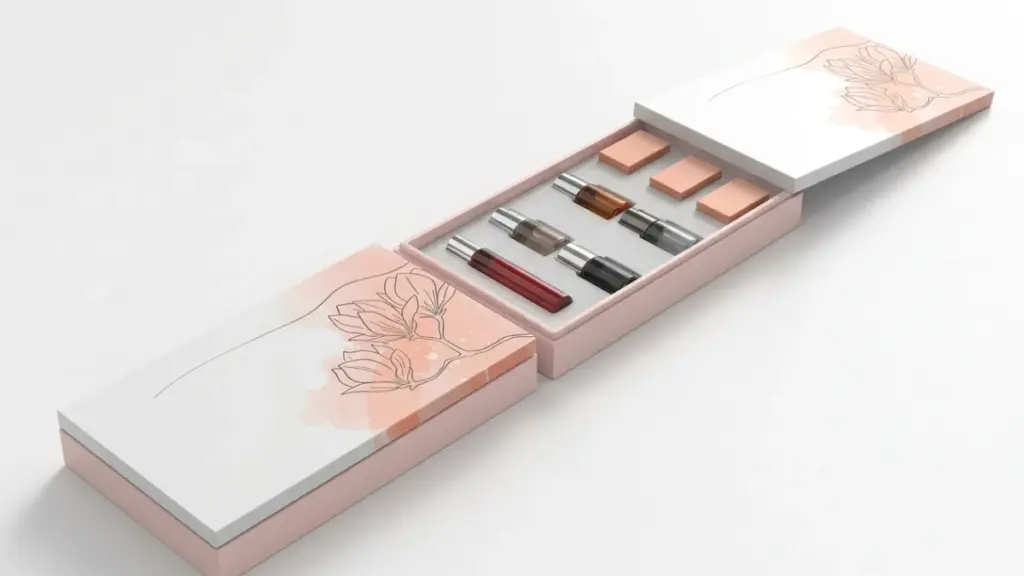
Main Types of Cosmetic Packaging Boxes
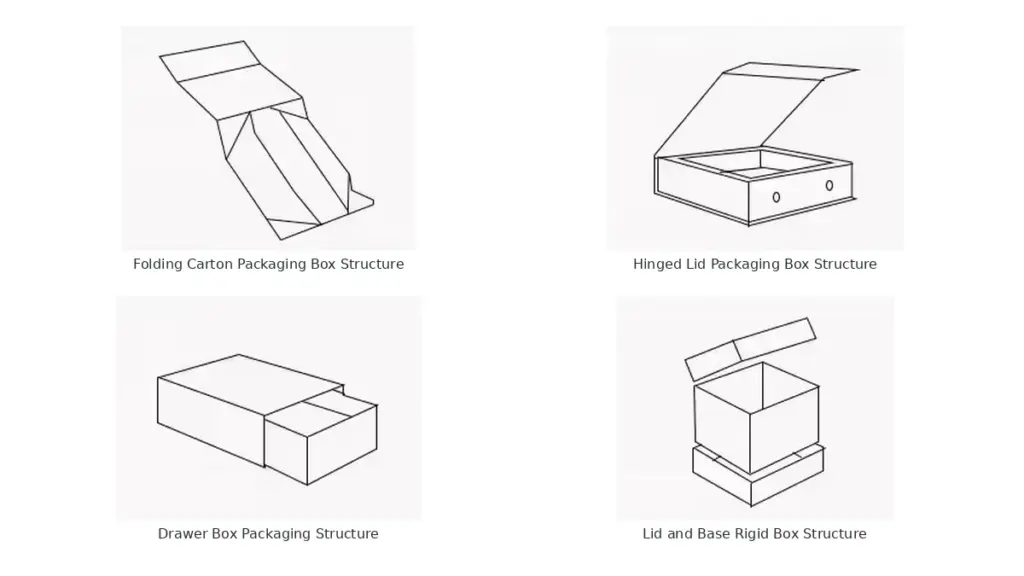
Cosmetic packaging boxes vary in construction, opening style, et présentation. The main types include rigid boxes, cartons pliants, and drawer boxes, each suited to different packaging requirements.
Boîtes rigides
Rigid boxes are made from thick paperboard wrapped in printed or decorative paper. Their sturdy construction helps protect products and creates a premium presentation, making them common for skincare gift sets, fragrance collections, and high-end cosmetic products. Common styles include lid-and-base boxes and magnetic closure boxes.
Cartons pliants
Folding cartons are made from paperboard that is printed, cut, and creased into a flat form for transport and later assembly. They are widely used for individual cosmetic products, including serum bottles, creams, rouges à lèvres, and palettes. Their flat-packed format supports efficient storage and shipping, while printing provides space for branding, product details, and regulatory information.
Boîtes à tiroirs
Drawer boxes consist of an outer sleeve and an inner tray that slides in and out. The tray can hold cosmetic products in a fitted insert, keeping items organized within the box. This structure is often used for skincare gift sets, beauty discovery kits, and multi-product collections where the opening experience is part of the presentation.
Other Rigid Box Styles
Rigid boxes are also available in different configurations to suit product presentation and packaging requirements.
- Boîtes à fermeture magnétique: These boxes use concealed magnets to keep the lid closed. They are commonly used for premium skincare sets, cosmetics gift boxes, and fragrance packaging.
- Lid-and-Base Boxes: These consist of a separate lid and base, usually with the lid covering part or all of the base. They are suitable for gift sets and products that need a structured presentation.
- Collapsible Rigid Boxes: These boxes fold flat when not in use and can be assembled for packing. They combine the appearance of rigid packaging with reduced storage and shipping volume before assembly.
Discuss Your Cosmetic Packaging Ideas
Boîtes rigides, Cartons pliants, and Drawer Boxes Compared
Cosmetic box structure depends on the product format, retail price point, and presentation requirements.
For a single retail item, a folding carton is often sufficient. Rigid boxes are more suitable for premium products and gift sets that require a sturdier presentation. For multi-piece sets, the number, forme, and arrangement of products affect the insert design and overall packaging cost. Voir rigid box construction for more details.
Drawer boxes require careful sampling to ensure the tray slides smoothly within the sleeve. The fit, clearance, and pull design all affect ease of use and assembly. Review the customization and sampling process before finalizing the design.
| Structure | Construction | Perceived Value | Expédition | Typical Applications |
|---|---|---|---|---|
| Carton pliant | Printed board, die-cut, creased, and glued | Standard retail presentation | Ships flat, maximizing pallet capacity | Retail skincare, masks, single-unit products |
| Boîte rigide | Grey board wrapped in printed paper | Premium presentation | Usually ships assembled unless collapsible | Gift sets, parfum, holiday editions |
| Boîte à tiroirs | Rigid sleeve with sliding tray and pull | Premium presentation with a layered opening | Components may ship separately, depending on design | Serums, duos, discovery sets |
| Lid-and-Base Box | Separate wrapped rigid lid and base | Premium presentation with a removable lid | Lid and base can be nested for shipping | Jars, parfum, single-product gift sets |
Matching Box Structures to Cosmetic Product Formats
The primary container determines the support, clearance, and protection a cosmetic box needs. Match the insert and outer structure to the product’s size, poids, fragilité, and packaging requirements before finalizing the design.
| Cosmetic Format | Suitable Structure | Key Design Consideration |
|---|---|---|
| Cream jar, verre | Lid-and-base rigid box with shaped insert | Support the base and prevent sideways movement |
| Serum bottle, dropper | Drawer box or rigid box with recessed cavity | Keep the bottle upright and support the shoulder |
| Lipstick tube | Slim folding carton or sleeve | Minimize packaging material for lightweight products |
| Palette or compact | Rigid box with paper or molded insert | Prevent bending and protect pressed powder or mirrors |
| Fragrance flacon | Lid-and-base rigid box with fitted insert | Cushion the glass and protect the shoulders |
| Skincare gift set | Magnetic or double-door rigid box with compartmented insert | Separate products and organize their presentation |
Cream Jars and Serum Bottles
Glass jars and dropper bottles need support in different areas. Consider these factors when specifying the structure:
- Glass cream jars: Support the base and prevent sideways movement with a shaped insert. Carton, pâte moulée, and foam offer different cost and cushioning options. Voir beauty box insert options.
- Stacking load: Check the filled box’s weight and the load it must withstand during pallet storage. This helps determine whether a rigid base or a reinforced folding carton is suitable.
- Dropper bottles: Keep tall bottles upright and support the shoulder to reduce movement. A recessed rigid-box insert or fitted drawer tray can provide this support.
Lipsticks, Compacts, and Palettes
Lightweight products often work well in folding cartons, while pressed powders and mirrored compacts need additional protection against bending and impact.
- Lipsticks: Use a slim folding carton or sleeve when the product needs little internal support.
- Pressed powder palettes: Consider a rigid box or a suitably reinforced carton to reduce flexing that could crack the powder.
- Mirrored compacts: Keep the mirror clear of the lid and use an insert to limit movement.
- E-commerce orders: Test the fully packed box under appropriate drop-test conditions, rather than testing the empty box alone.
Fragrance and Multi-Piece Gift Sets
Fragrance packaging needs to protect glass bottles while maintaining the presentation expected of a premium product. Gift sets also require careful arrangement of multiple items.
- Subscription sets: Coordinate the outer box, inner boxes, and inserts to fit the product assortment. See the guide to cosmetic subscription box packaging.
- Fragrance bottles: Use a fitted insert to limit movement and cushion vulnerable areas, particularly the shoulders. Consider the durability of the wrap and closure if customers are likely to keep the box.
- Multi-piece sets: Design the insert around each product’s dimensions and position. Separate compartments help prevent items from shifting or contacting one another.
- Magnetic and double-door boxes: Consider these structures when the opening sequence and visibility of the products are important to the presentation.
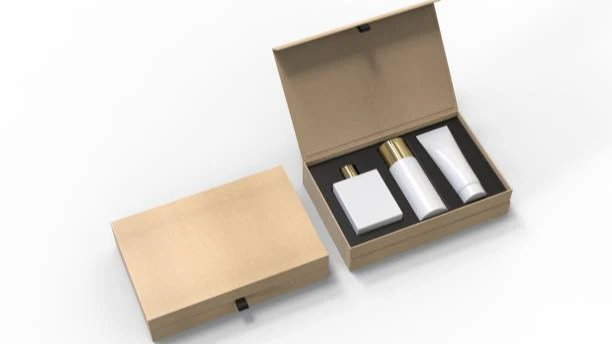
Structural Limits Buyers May Overlook: Drawer Friction, Lid Fit, and Closures
Structural drawings define board dimensions, creases, and glue positions, but the finished box also depends on wrap thickness, laminage, material behavior, and repeated use. These factors should be checked during sampling.
Drawer Slide and Wrap Thickness
A drawer may slide smoothly before wrapping but bind after paper and lamination increase the thickness of the tray and sleeve. Allowance for these materials needs to be included in the structural design before tooling.
When reviewing samples, check three factors:
- Clearance: The wrapped tray should slide smoothly inside the sleeve without excessive friction.
- Épaisseur du matériau: Account for both wrap paper and lamination when setting the clearance.
- Humidité: Paperboard can absorb moisture and change dimensions. If the boxes will be stored or shipped in humid conditions, test samples after conditioning.
Lid Clearance, Magnets, and Repeat Openings
Lid fit depends on the clearance between the lid and base after wrapping. Magnetic strength and hinge durability also affect how the box performs during repeated use.
Check these details during sampling:
- Lid fit: The lid should seat properly and open without excessive force.
- Magnetic closure: Confirm the specified magnet strength and test whether the lid stays securely closed.
- Hinge durability: Open and close hinged boxes repeatedly to check for creasing, cracking, or loosening around the hinge.
- Repeat-use testing: Evaluate the finished, wrapped box rather than relying on drawings or photographs alone.
How Structure Affects MOQ, Échantillonnage, and Carton Volume
Structure sets the order floor, the sampling route, and the freight bill, and those three constraints outweigh the unit price.
Why Rigid Boxes Raise the Order Floor
Folding cartons generally require less setup than rigid boxes, which involve wrapping, assemblée, and sometimes custom inserts. Ask suppliers for separate MOQs for each structure and insert type before confirming the order budget.
Hand Samples Versus Digital Proofs
Digital proofs confirm artwork and layout, while physical samples verify dimensions, ajuster, and closure. Confirm the sample format, lead time, and revision allowance before setting the launch schedule.
Carton Volume and Freight
Folding cartons ship flat, while standard rigid boxes take up more space. Collapsible rigid boxes reduce shipping volume but require assembly after delivery. Compare packed carton dimensions, units per carton, and freight cost per unit. For fragile products, confirm whether transit testing covers the complete box and insert configuration.
Common Structural Mistakes in Cosmetic Packaging Projects
Packaging structure affects product fit, assembly efficiency, and transit protection. Check these five points before approving the final sample.
- Testing the box without the product. Evaluate the complete packed configuration to check product movement, insert support, and transit protection.
- Approving a 3D render without a physical sample. A render cannot verify lid clearance, wrap thickness, or the actual fit of assembled parts.
- Finalizing materials and finishes before the structure. Board thickness, crease lines, and surface finishes must work with the selected box structure.
- Sampling without the insert. Test the box and insert together to confirm product fit and stability.
- Overlooking assembly requirements. Check whether the box can be assembled efficiently with the planned packing process and labor.
Choosing a Structure by Product, Price Tier, and Channel
The sales channel and product price point help determine the box structure, level of protection, and packaging cost.
Retail Shelf Versus E-Commerce
Retail packaging needs to present the product clearly on the shelf, while e-commerce packaging must withstand shipping and handling. Folding cartons suit many retail products, while rigid boxes or protective mailers may be better for gift sets and shipped orders. Products sold through both channels may need separate presentation and shipping packaging.
When to Trade Up or Down a Tier
Rigid boxes suit premium gift sets and products where presentation is part of the selling experience. Folding cartons are often more practical for everyday products, refills, and price-sensitive ranges. For product lines with different price points, match the structure and finish to each product’s positioning and packaging budget.
Pensées finales
Cosmetic packaging structure affects product presentation, MOQ, échantillonnage, shipping costs, and product protection. Folding cartons suit many retail products, while rigid boxes support premium gift sets and presentation-focused packaging. The right specification depends on the product dimensions, canal de vente, target price, et exigences d'emballage.
At Risque, we help beauty brands develop custom packaging boxes that align with product needs, positionnement de la marque, and order requirements. Contactez notre équipe to discuss your cosmetic packaging project.
Foire aux questions
Which box structure works best for a cream jar?
A cream jar needs support from below, so a lid-and-base rigid box with a shaped insert is the usual answer. The insert carries the jar weight and stops it shifting sideways. A folding carton with a locking tray suits lighter jars at lower price points. Weigh the jar first, then confirm the insert holds the base rather than the lid.
Is a rigid box worth the higher unit cost for a skincare set?
A rigid box earns its cost when the set is a gift or the packaging gets kept after use. For a skincare set, the insert holds several glass pieces apart, which folding board manages with more difficulty. If the set sells at a mass price point, a folding carton with a tray keeps the pack affordable and still protects the product.
Can a drawer box ship flat to reduce freight cost?
Some drawer boxes are designed so the tray and sleeve travel flat and are assembled at the destination, which lowers freight volume. The trade-off is assembly labor at the receiving end and slightly looser tolerances. Ask your supplier which drawer build ships flat, then test the slide after the box has been assembled and wrapped.
What is the minimum order quantity for custom cosmetic boxes?
Minimum order quantity depends on the structure, the tooling, and the print setup, so no single figure applies across a range. A folding carton needs less setup than a rigid box, and a custom insert raises the floor again. Ask for the order floor by structure, and confirm it in writing before quoting your own customers.
How long does production take after artwork approval?
Production starts after the artwork and the physical sample are approved, and the schedule depends on structure, finition, and the queue at the factory. Ask for a written schedule that separates material lead time, impression, assemblée, and shipping. Confirm that schedule before you publish a launch date, and treat any verbal promise as unconfirmed.
When should I choose a lid-and-base box?
A lid-and-base box is a two-piece rigid structure with a separate lid and base, wrapped in printed paper. Choose it when the product is heavy, when the box gets kept, or when the pack should open without a hinge. It suits fragrance, pots, and single-piece gift sets, and it fills faster on a packing line than a drawer box.